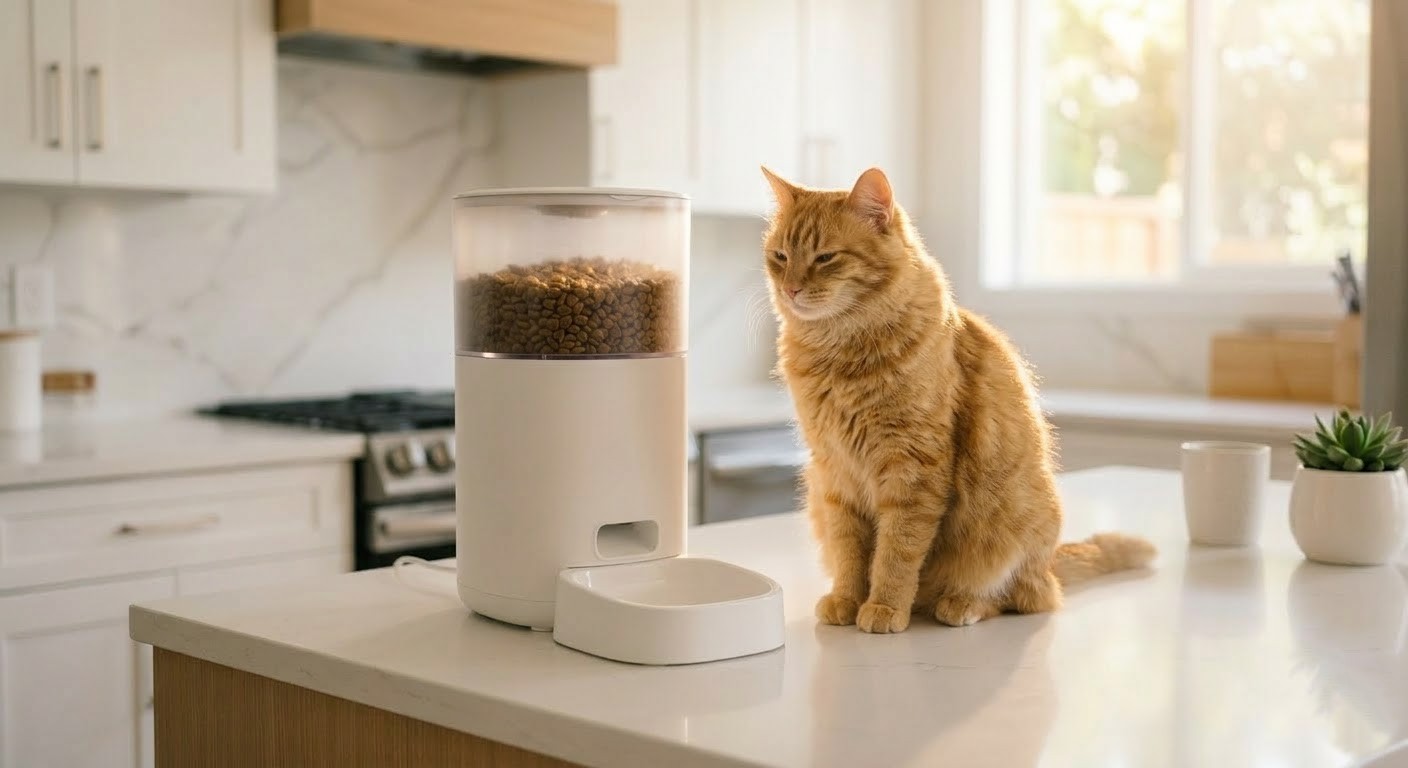
Automatic pet feeders are safe when chosen carefully and maintained properly. The biggest risks are food jams causing missed meals, bacterial buildup from infrequent cleaning, and power failures without battery backup. Look for food-grade materials, anti-jam dispensing, and a battery backup. Never use a feeder as your only care plan for trips longer than 1 to 2 days.
That 3 am paw to the face. The chirping at 5:45 am. The dramatic flop onto your keyboard because breakfast is twenty minutes late and apparently that constitutes a crisis.
If you’ve ever considered an automatic feeder to claw back control of your mornings, you’re not alone. Millions of pet owners use them daily. But before you hand mealtime over to a machine, it’s fair to ask: are automatic pet feeders actually safe?
The short answer is yes — with the right setup and some basic maintenance. But “safe” and “foolproof” are two very different things, and there are real risks that a surprising number of pet owners only discover after something goes wrong. We’ve spent 90-plus days testing feeders with real cats and dogs in real homes.
In this guide, we’ll cover every safety risk worth knowing about, the features that actually matter, and how to use your feeder correctly so your pet never goes hungry.
If you’re still figuring out whether a feeder is even right for your situation, our 5 signs you need an automatic feeder guide is a solid starting point.
Are Automatic Pet Feeders Safe for Cats and Dogs?
Automatic pet feeders are safe for daily use when supervised and kept clean. Avoid relying on them as your only care plan for trips over 2 days.
In the right situation, feeders are not just safe — they’re genuinely beneficial. VCA Hospitals notes that scheduled feeding is essential for managing certain health conditions, including weight management plans and prescription diets.
For overweight pets especially, the portion control that a quality feeder provides can be meaningful. The Association for Pet Obesity Prevention’s 2022 survey found that 59% of dogs and 61% of cats in the US are classified as overweight or obese — and free-feeding at will is one of the biggest contributors to that number.
Two veterinarians consulted by Rover.com, Dr. Sabrina Kong DVM and Dr. Megan Conrad BVMS, both confirmed that automatic feeders are safe when used with regular supervision.
The critical caveat from Dr. Kong: feeders are “better for use when you’re home and able to check it is working properly every once in a while.” That’s not a knock on the technology. It’s just honest about how these devices are designed to fit into a care routine — not replace one.
What Vets Actually Say About Feeder Safety
The veterinary consensus is fairly consistent. Feeders work well for busy owners, for pets on structured diets, and for multi-pet homes using microchip-activated models that prevent food stealing. They work less well as a standalone care solution for extended absences.
If your cat is on a medical diet or has a condition requiring consistent meal timing, a feeder can actually be the most responsible choice you make.
The Difference Between “Safe” and “Foolproof”
No mechanical device is 100% fail-proof. Kibble jams. Apps crash. Batteries die at inconvenient times. The feeders that pass the safety test are the ones where the manufacturer has engineered around these failure points — and where the owner stays engaged enough to catch small problems before they become big ones.
What Are the Main Safety Risks of Automatic Pet Feeders?
The main risks are food jams, bacterial buildup from poor cleaning, power failures without battery backup, and overfeeding from inaccurate portions.
Understanding these four risks is genuinely the difference between a feeder that works well and one that leaves you with a very hungry, very annoyed pet.
Food Jams and Missed Meals
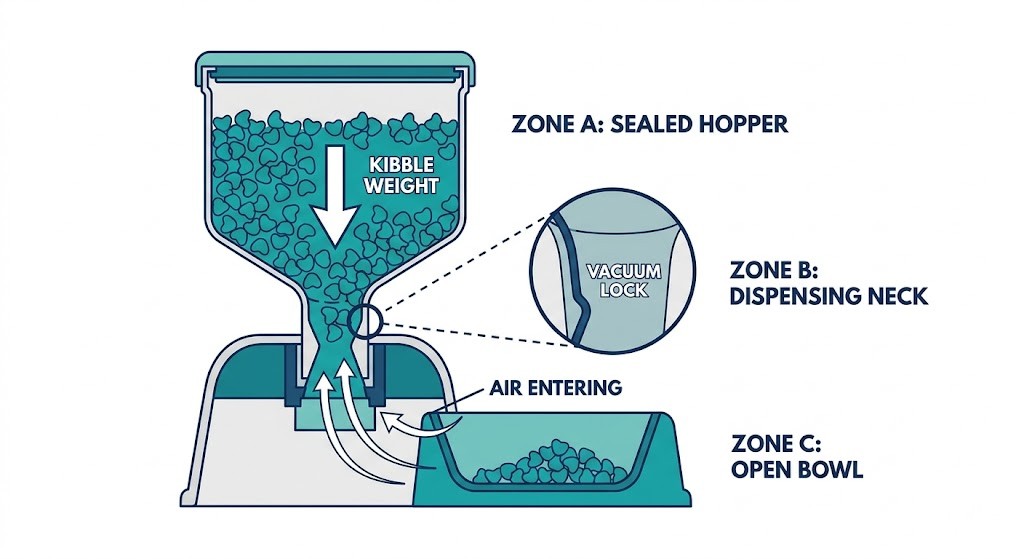
Kibble size matters more than most people realize. Irregular-shaped pieces or large kibbles can clog the dispensing mechanism, especially in cheaper models with narrow chutes. Humidity makes everything worse. In warm, moist environments, kibble absorbs moisture and expands, blocking the dispenser entirely.
After setting up any new feeder, check the bowl after the first two or three scheduled meals to confirm food is actually reaching it — don’t just assume the timer fired correctly.
Bacterial Buildup
This one is sneaky. Food residue accumulates in corners of the hopper, the dispensing chute, and the food bowl — especially with smaller kibble pieces that leave behind an oily dust. Left uncleaned, that residue becomes a bacterial problem.
Meowant’s buying guide points out that dishwasher-safe components significantly reduce this risk, but only if you’re actually using them. Weekly cleaning is the baseline minimum, not a stretch goal.
Power Failures Without Battery Backup
This is the risk that catches people off guard. You’re away at work. The power flickers at noon. Your cat misses both the lunch and dinner dispensers. No notification. No backup. Just a silent machine and a frustrated cat. Battery backup is not a luxury feature — it’s a core safety requirement.
In our 90-day test of the Petlibro Air WiFi feeder, the battery backup activated during 2 separate power outages and delivered every scheduled meal without interruption. That kind of reliability is what you’re paying for.
Overfeeding From Dispensing Inaccuracy
Not all feeders dispense the same amount reliably. In our testing, the PetSafe Healthy Pet Simply Feed landed within 1/8 cup of the programmed amount 98% of the time across a full 90 days with three cats. Compare that to the Arf Pets dog feeder, which showed a variance of plus or minus 15% per portion.
That doesn’t sound like much until you calculate it across a week of meals — then it’s a significant calorie discrepancy for a pet on a weight management plan. If portion control is your primary reason for getting a feeder, dispensing accuracy is the first specification to check.
Our guide on how to prevent cat overeating breaks down the health consequences of consistent overfeeding in more detail.
Which Safety Features Should You Actually Look For?
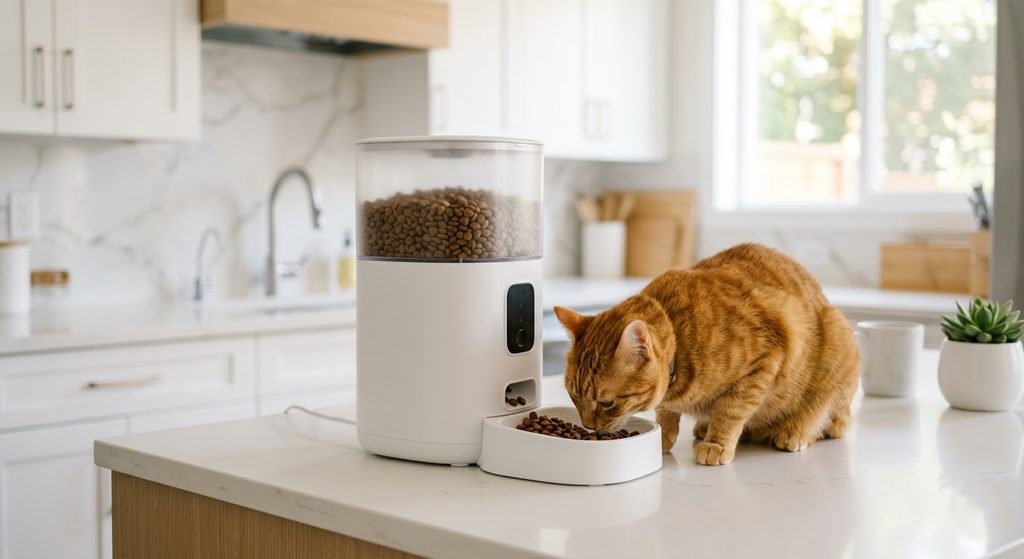
Look for battery backup, anti-jam dispensing, BPA-free food-grade materials, and a quiet motor under 55 dB for anxious pets.
Here’s a practical breakdown of the features that separate genuinely safe feeders from the ones that will let you down:
| Feature | Why It Matters | Red Flag to Avoid |
|---|---|---|
| Battery backup | Keeps feeding during power outages | No backup whatsoever |
| BPA-free food-grade plastic | Prevents chemical leaching into food | Unlabeled or cheap generic plastic |
| Anti-jam dispensing | Prevents missed meals from clogged chutes | Single narrow chute, no jam detection |
| Portion accuracy within 1/8 cup | Controls calories precisely | Variance greater than 10% per serving |
| Quiet motor (under 55 dB) | Won’t startle anxious or noise-sensitive pets | Motor louder than 60 dB |
| Sealed hopper lid | Keeps food fresh, keeps pests out | Loose or poorly fitting lid |
| Dishwasher-safe parts | Makes weekly cleaning realistic | No removable components at all |
Motor noise is something most buyers overlook until they see their nervous cat bolt from the kitchen on the first dispense. In our testing, the PetSafe Simply Feed ran at 48 decibels — quieter than a typical conversation.
Our oldest test cat, a 12-year-old rescue who startles at basically everything, barely flinched. The Arf Pets dog feeder, on the other hand, ran at around 60 dB. Fine for a confident Golden Retriever, less ideal for a skittish cat in a quiet apartment.
Microchip-activated feeders are worth serious consideration in multi-pet homes. VCA Hospitals calls out microchip technology specifically: the feeder opens only for the registered pet, preventing food theft and ensuring prescription diets reach the right animal every time.
How to Keep Your Automatic Feeder Safe: Cleaning and Maintenance
This is the section most pet owners skip. It’s also the one that causes the most problems. A feeder you bought to support your pet’s health becomes a health risk the moment bacterial buildup takes hold. The good news: maintenance takes less time than you’d expect.
Weekly Cleaning Routine
Remove the food bowl and the hopper lid. Wash both with warm soapy water, or run them through the dishwasher if the parts are rated for it. In our testing, the Cat Mate C500’s fully dishwasher-safe parts made the weekly clean a five-minute job.
The PetSafe Simply Feed takes around eight minutes by hand — still fast, just a bit more involved. After cleaning, wipe down the dispensing chute with a damp cloth to clear any residue. Reassemble, confirm the next scheduled meal fires correctly, and you’re done for the week.
Monthly Deep Clean Checklist
Once a month, do a full disassembly. That includes the entire hopper interior, the food chute, any tubes the kibble travels through, and the exterior of the motor housing — the outside only, never water near electronics.
Check the hopper lid seal for cracks or warping, which compromise the airtight seal and let moisture in. Our full step-by-step process is in the automatic feeder cleaning guide.
Signs Your Feeder Needs Replacing
A grinding noise the motor didn’t use to make is the clearest warning sign. Cracks in the hopper or bowl are another — bacteria hide in cracks and can’t be scrubbed out. Most quality feeders last two to four years with regular maintenance. After that, reassessing makes financial and practical sense.
Are Automatic Feeders Safe to Leave Pets Completely Unsupervised?
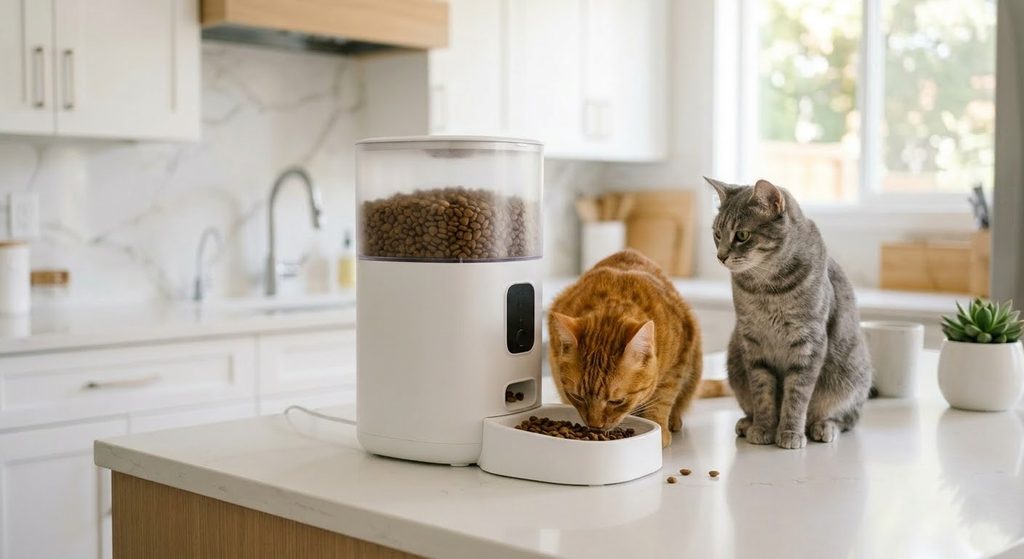
Automatic feeders are safe for daily absences of 8 to 12 hours. For trips over 1 to 2 days, pair the feeder with a pet sitter who can check for jams.
This is where feeder users tend to split into two camps: the ones who’ve had a feeder fail on a trip and swear by pet sitters now, and the ones who’ve never had a problem and think the concern is overblown. Both are telling the truth. It really does come down to duration.
For a standard workday — 8 to 10 hours away — an automatic feeder is exactly what it was designed for. Consistent, low-maintenance, reliable. Run it for a few days while you’re home first to confirm it’s dispensing correctly, and you’re in good shape.
For trips over 48 hours, the calculation changes. Even reliable feeders can jam. Apps crash. Anxious cats, after missing one meal from a malfunction, sometimes refuse to approach the feeder again even after it’s been fixed — that’s a behavioral response that a pet sitter can identify and correct, but a feeder can’t.
Dr. Kong’s guidance applies broadly here: feeders are supplements to care, not replacements for it. Our automatic feeder travel guide covers the logistics of pairing feeders with sitter check-ins.
Multi-cat homes need extra thought. If your cats have any food-guarding history, a shared feeder becomes a conflict point fast. One dominant cat can stake out the machine and block access entirely for a more submissive housemate — even when every meal technically dispenses on schedule. Separate feeders, or microchip-activated models, solve this completely.
Our Tested Picks: Safest Automatic Feeders in 2026
Two feeders consistently performed best in our safety testing across real-world conditions:
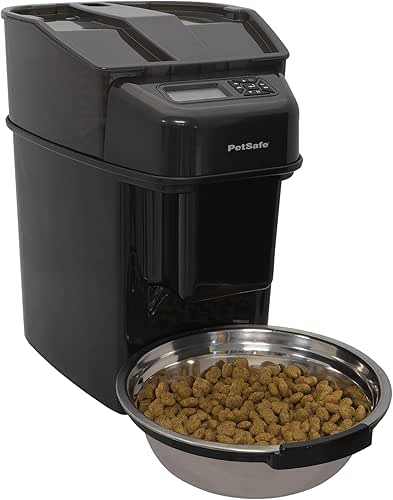
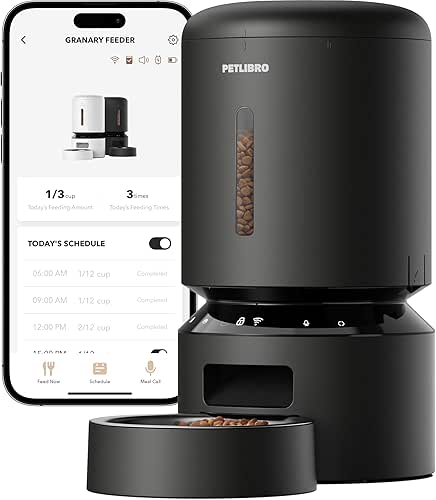
Both are covered in full in our Best Automatic Pet Feeders 2026 roundup. For help matching a feeder to your specific situation, the how to choose an automatic pet feeder guide walks through every decision point.
Wrapping Up: Are Automatic Pet Feeders Safe?
Yes. With the right feeder, a proper setup, and a cleaning habit that takes less than ten minutes a week, automatic feeders are safe and genuinely useful tools for pet owners.
The risks are real — food jams, bacteria, power failures, portion inaccuracy — but every single one is manageable with a bit of upfront research and ongoing attention. Three things to remember: prioritize battery backup and accurate dispensing above every other feature.
Clean the food tray and bowl every week without skipping. And for any absence longer than 48 hours, bring in a sitter to check in — the feeder is there to help, not to replace the care your pet deserves.
Frequently Asked Questions
Can an automatic feeder make my cat sick?
Poorly cleaned feeders can cause bacterial growth that leads to illness. Clean the food tray and bowl weekly to eliminate this risk entirely.
Bacterial buildup in the hopper, dispensing chute, and bowl is the most common hygiene issue with automatic feeders, and it accelerates in humid environments or with oily kibble varieties. The fix is straightforward: wash all removable parts every week with warm soapy water, or run dishwasher-safe components through a full cycle. If your cat develops vomiting or digestive symptoms after switching to a feeder, cleaning frequency and kibble freshness are the first two factors to investigate before anything else. Always consult your vet if symptoms continue.
What happens if the power goes out with an automatic feeder?
Models with battery backup continue feeding normally during outages. Without battery backup, your pet may miss meals until power is restored.
This is one of the most important safety features to verify before buying. In our 90-day test of the Petlibro Air WiFi feeder, battery backup activated during 2 separate outages and delivered every scheduled meal without any disruption. Feeders without backup simply stop functioning when power cuts out — no alert, no failsafe, no workaround. If you leave pets home during work hours or live in an area with unreliable power, battery backup moves from a nice-to-have to a non-negotiable.
Are automatic feeders safe for kittens?
Automatic feeders can be safe for kittens when set to small, frequent portions. Consult your vet for exact amounts based on breed and age.
Kittens have different nutritional needs from adult cats and typically require more frequent meals in smaller amounts during growth stages. The primary risk with kittens is under-feeding, not over-feeding — so choose a feeder precise enough to dispense small portions accurately (1/8 cup or less per meal). The PetSafe Simply Feed’s 1/8 cup minimum portion makes it one of the more suitable options. Run the feeder for several days while you’re home before leaving a kitten to rely on it. Our kitten and puppy feeding schedule guide covers meal timing and portions in full.
How often should I clean my automatic pet feeder?
Clean the food tray, bowl, and dispenser chute weekly with warm soapy water. A full disassembly and deep clean every 30 days is ideal.
Weekly cleaning takes 5 to 8 minutes, depending on the model. The Cat Mate C500’s completely dishwasher-safe components make it the fastest weekly clean we’ve tested — reassembly included, the whole process takes under 5 minutes. The PetSafe Simply Feed takes around 8 minutes by hand, still fast once you know the steps. The monthly deep clean should include the hopper interior, all chutes and tubes, and an exterior inspection of the motor housing. Mark it in your calendar — one skipped month has a way of turning into two, and that’s when problems quietly build up.
Are automatic feeders safe for wet food?
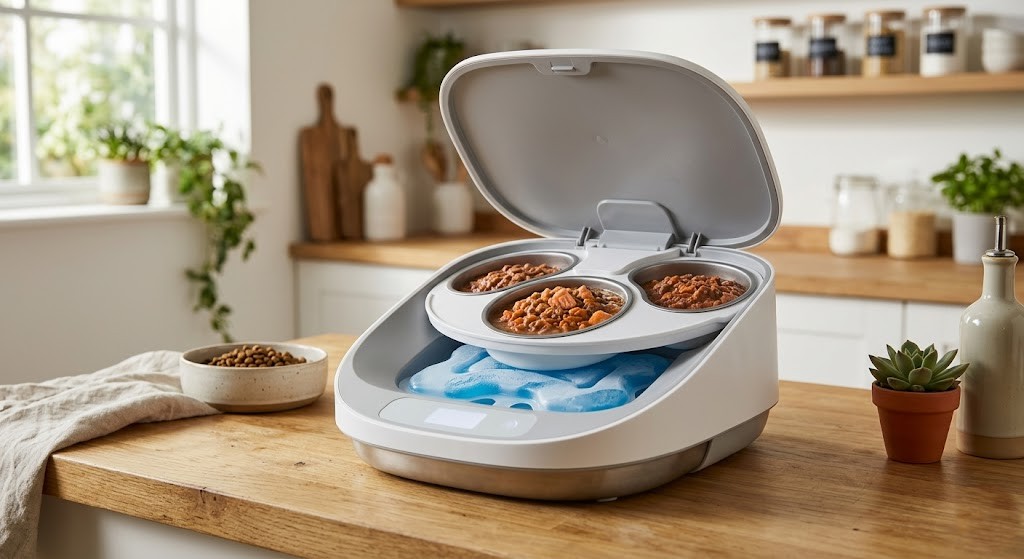
Most automatic feeders are designed for dry kibble only. Wet food models with sealed compartments and ice packs can work safely for up to 8 hours.
Wet food in a standard hopper-style feeder will spoil quickly, clog the mechanism, and create a bacterial problem fast. If your pet eats wet food, you need a feeder specifically built for it. The Cat Mate C500 uses individual sealed compartments with an included ice pack insert. In our 60-day test with two cats in a 72°F room, it kept wet food fresh for up to 8 hours per serving. For longer storage, refrigerated feeders like the Petlibro refrigerated model handle up to 3 days of meals. Our full breakdown is in the wet vs dry food in automatic feeders guide.

Leave a Reply