You filled the automatic feeder with wet food before heading to work. Seven hours later, you came home to a soggy, gray mess of congealed pâté — and your cat sitting next to it, giving you the look. The feeder technically dispensed the food. But “dispensed” and “safe to eat” are not the same thing.
Here’s what nobody tells you upfront: the majority of automatic pet feeders are not designed for wet food. Not even close. Gravity feeders, hopper-style dispensers, auger-based units — they’re built for dry kibble. Put wet food in most of them and you’re not just wasting expensive canned food; you’re potentially serving your pet something that’s been sitting in the bacterial danger zone for hours.
That said, some feeders do work with wet food. There are specific types built for it, and choosing the right one makes all the difference. In this guide, we’ll break down which feeders can safely handle wet food, how long wet food actually stays safe, and what we found in our 60-day real-world test. Check out our complete guide to automatic pet feeders if you want the full landscape first.
Do Most Automatic Pet Feeders Work with Wet Food?
No. Most automatic feeders are designed for dry kibble only. Gravity feeders and hopper-style dispensers cannot safely handle wet food.
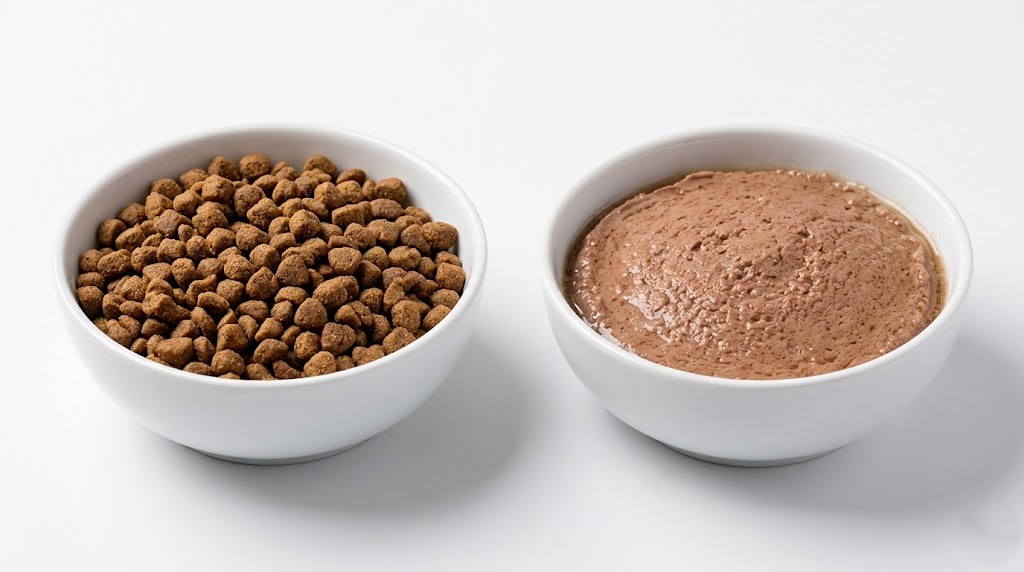
This isn’t a minor caveat buried in the user manual — it’s a fundamental design issue. Dry kibble flows freely, doesn’t stick, doesn’t spoil at room temperature, and cleans up easily. Wet food does none of those things. It’s around 70–80% moisture, it sticks to every surface it touches, and it starts growing bacteria fast once it’s out of the can.
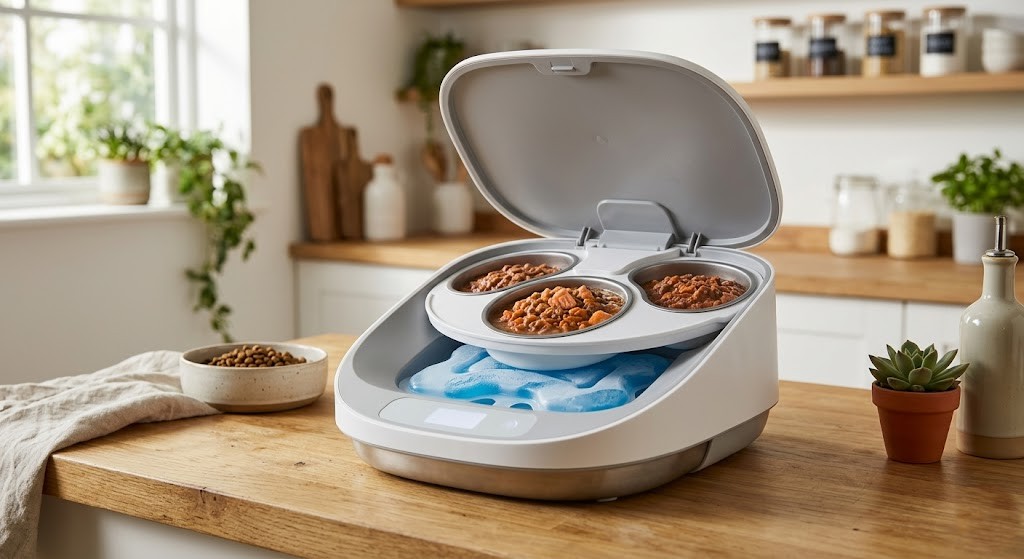
The feeders that can handle wet food are a specific category: rotating compartment feeders with sealed lids (with or without ice packs) and refrigerated smart feeders. Everything else — gravity feeders, hopper dispensers, conveyor-style units — should stay in the dry-food lane. Full stop.
Why Can’t Gravity and Hopper Feeders Handle Wet Food?
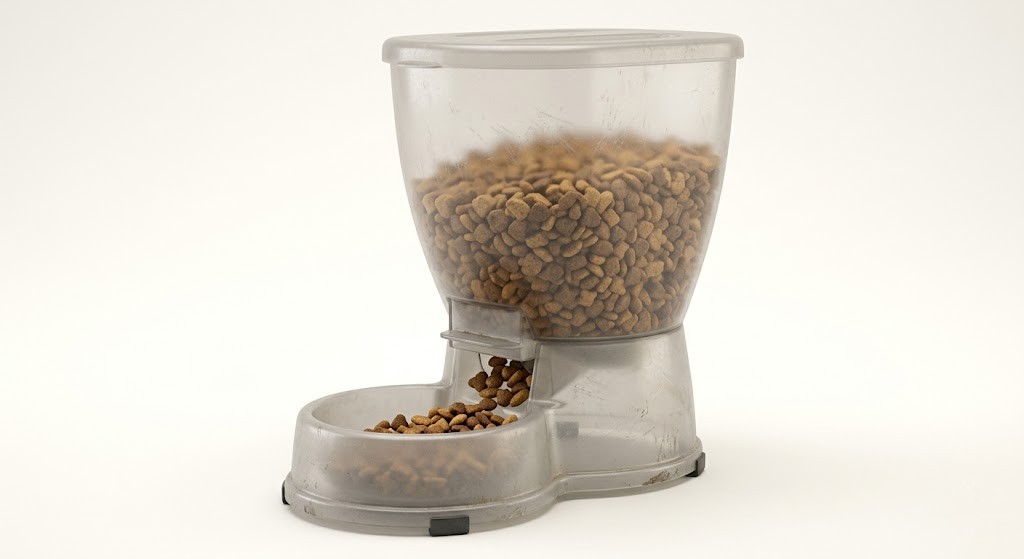
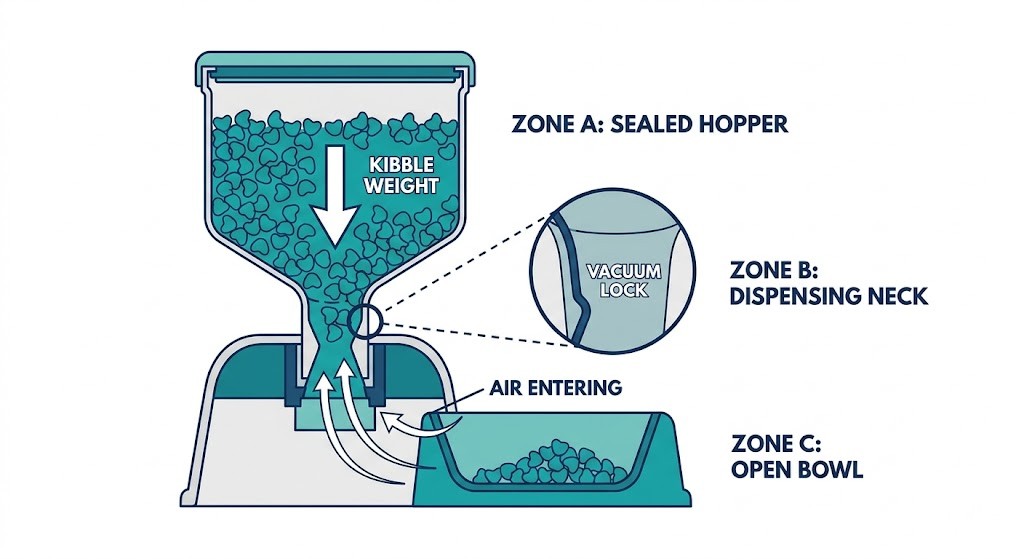
Gravity feeders rely on dry food falling freely into a bowl. Wet food clogs the chute immediately, sticks to surfaces, and spoils within hours with no cooling mechanism in place.
Picture trying to pour chunky pâté through a narrow plastic funnel. It’s not going to work. The moisture causes the food to glob together, stick to the chute walls, and eventually jam the entire mechanism. Even if some wet food made it through, the unrefrigerated reservoir sitting at room temperature would turn it into a petri dish within a couple of hours.
Same goes for auger-based hopper feeders — the ones with the large dry-food containers that dispense by spinning a threaded screw. Those augers are precision-sized for kibble. Wet food would coat the threads, dry into a hardened crust, and either jam the motor entirely or contaminate every future meal with bacteria. We’ve seen it happen. It’s as unpleasant as it sounds.
The bottom line: if your feeder looks like a tall hourglass or a cereal dispenser, it’s a dry-food-only unit. No exceptions.
How Long Does Wet Food Stay Safe Outside the Fridge?
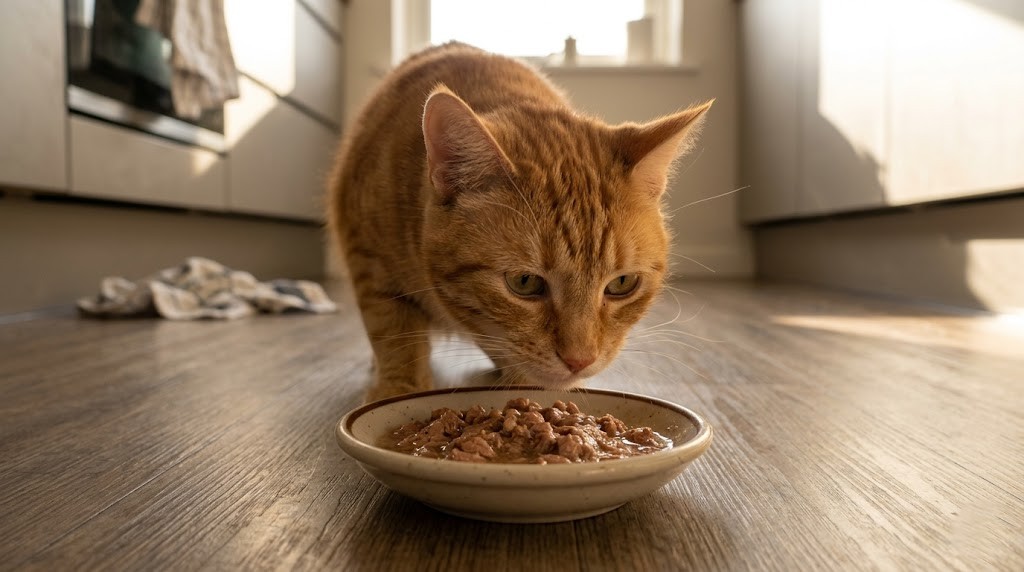
Wet pet food at room temperature is only safe for 1–2 hours. Above 80°F (27°C), it can spoil in under an hour as bacteria multiply rapidly in warm, moist conditions.
According to PetMD, opened wet food should be refrigerated promptly and used within 3–5 days. Once it’s served in a bowl at room temperature, that clock moves fast. The USDA food safety guidelines classify the range between 40°F and 140°F as the “danger zone” — the temperature window where bacteria like Salmonella and Listeria multiply most aggressively.
For pet owners in warmer climates or during summer months, that 1–2 hour window shrinks even further. A home that sits at 82°F while you’re at work isn’t just uncomfortable — it’s an environment where your pet’s food can spoil in under 60 minutes. If your cat’s feeding schedule involves wet food sitting in a feeder for hours during the day, you need a feeder that actively keeps food cold.
The fix isn’t complicated — but it does require choosing the right equipment.
What Automatic Feeder Types Actually Work with Wet Food?
Three feeder types handle wet food safely: rotating tray feeders with ice packs (up to 8–12 hours), refrigerated smart feeders (up to 72 hours), and single-compartment timed cover feeders for short absences.
Here’s how each type plays out in practice:
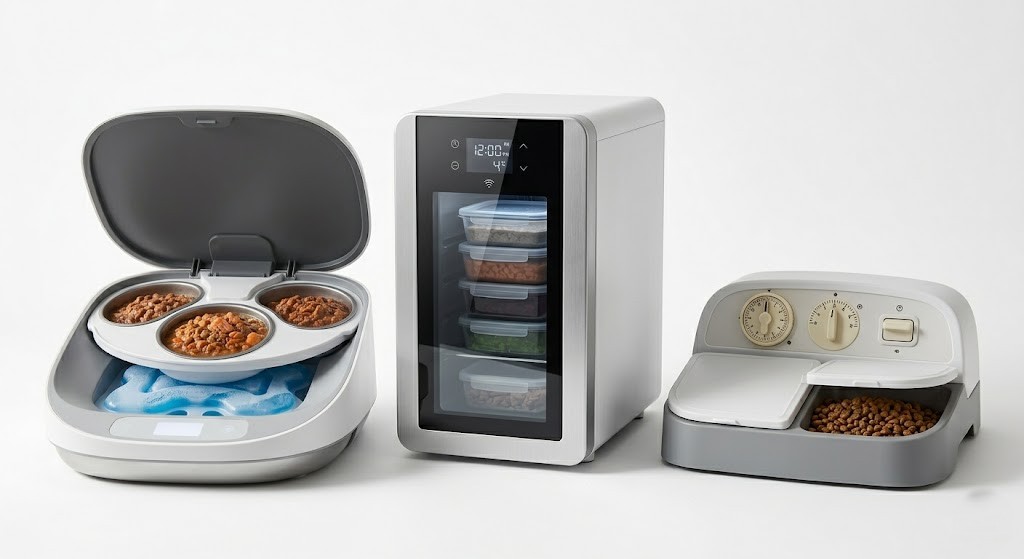
Rotating compartment feeders with ice packs — Models like the Cat Mate C500 use sealed compartments that open on a schedule. You place an ice pack underneath the tray to keep the food cold between meals. They’re simple, affordable, and reliable for owners who are out for a workday but home at night. The tradeoff: ice packs need to be frozen and swapped out, and they don’t last more than 8–12 hours in a warm room.
Refrigerated smart feeders — The PetLibro Polar is the standout in this category. It uses semiconductor cooling technology to keep wet food chilled for up to 72 hours without any ice packs. Meals are pre-loaded into sealed compartments, kept cold, and then the cooling briefly pauses 30 minutes before serving so food reaches a palatable temperature. According to cats.com, it was the top-performing wet food feeder in their tested lineup. It’s pricier — around $130 — but for pet parents who regularly work long days or take weekend trips, it’s the only option that doesn’t compromise food safety.
Single-compartment timed feeders — Budget-friendly options that simply open a sealed lid at a programmed time. No cooling, no ice packs. These work if you’re gone for a few hours and want one scheduled meal. Anything longer than that, you’re pushing the food safety window. Check our full cat feeder guide for tested comparisons across all three types.
Our 60-Day Test: Cat Mate C500 with Wet Food
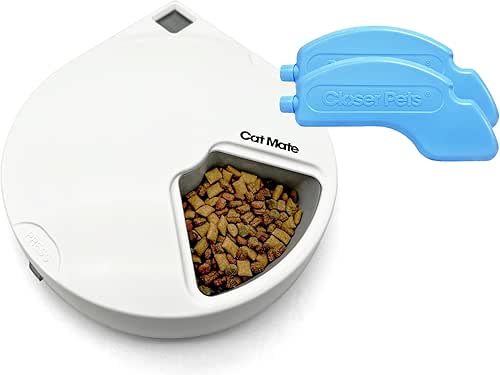
We ran the Cat Mate C500 for 60 days with two cats — a 3-year-old and a 7-year-old, both weighing 10 lbs — specifically testing its wet food performance. The short version: it works well within its limitations.
The C500 has five compartments, each holding about 1 cup of food. With the included ice pack underneath the tray, wet food stayed fresh for up to 8 hours in a 72°F room. For daily use — filling in the morning, feeding across the day while you’re at work — it held up well. Opening was on schedule 98% of the time over 60 days. The one missed meal was a low-battery issue, not a mechanical failure.
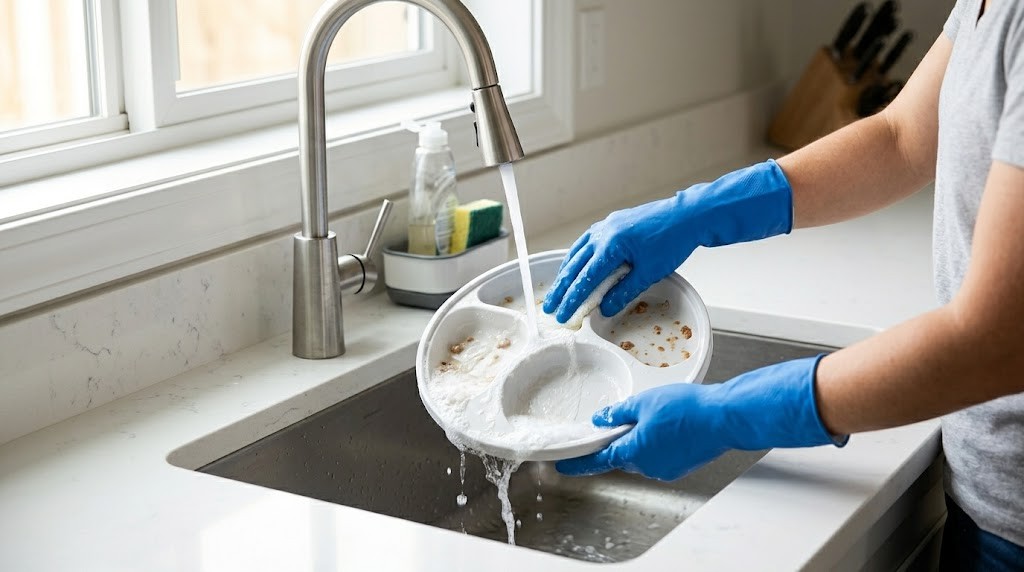
Cleaning took about 5 minutes since all parts are dishwasher-safe. That matters more than you’d think with wet food. Cleaning an automatic feeder regularly isn’t optional — bacteria build up fast in moist compartments, and proper feeder hygiene becomes critical when wet food is involved.
The honest downsides: five compartments means a maximum of five meals total, which limits how much scheduling flexibility you get. It’s also not great for trips longer than two days. The plastic feels cheaper than premium feeders, and the lid opening was loud enough to startle our cats for the first three days. They got over it. At $44.99, it’s the most affordable wet food feeder we’d actually recommend — but it’s a daily-use tool, not a travel solution.
How Do You Choose Between an Ice Pack Feeder and a Refrigerated Feeder?
If you’re gone 8 hours or less daily, an ice pack feeder handles wet food safely. For weekend trips or longer absences, only a refrigerated feeder can keep wet food safe without spoiling.
Think about your actual routine. If you work a standard day job and come home every evening, an ice pack feeder like the Cat Mate C500 ($44.99) gets the job done without the premium price tag. Freeze the ice pack the night before, load your compartments in the morning, and your pet gets scheduled wet food throughout the day. That’s a reasonable workflow for most people.
If you travel for work, take weekend trips, or regularly have unpredictable hours, an ice pack feeder leaves too much room for error. Ice packs thaw. You forget to freeze them. The room temperature spikes. A refrigerated feeder removes those variables entirely. The PetLibro Polar at around $130 is the current benchmark — it doesn’t need ice packs, connects to an app for scheduling, and keeps food safe for up to 72 hours.
If you’re unsure which direction to go, our guide on using feeders when traveling walks through the exact decision points in more detail. And as always — consult your veterinarian before making significant changes to your pet’s feeding routine, especially if they have health conditions that affect their diet.
The Bottom Line
Most automatic pet feeders don’t work with wet food — and forcing them to is a food safety problem, not just a mechanical one. Gravity feeders will jam. Hopper-style dispensers will spoil the food before your pet gets a chance to eat it. The feeders that do work — rotating compartment feeders with ice packs and refrigerated smart feeders — are specifically designed for the moisture, temperature, and hygiene requirements that wet food demands.
For most pet owners with regular work schedules, the Cat Mate C500 hits the sweet spot: affordable, reliable, and genuinely tested with real cats. For longer absences or warmer homes, a refrigerated feeder is worth the investment.
The right feeder doesn’t just solve a convenience problem — it keeps your pet eating safely, on schedule, whether you’re home or not. For a deeper look at how wet and dry food compare across all feeder types, check out our full breakdown: Wet vs. Dry Food in Automatic Feeders — What Works Best?
Frequently Asked Questions
Can I put wet food in a PetSafe Simply Feed?
No — the PetSafe Simply Feed is designed for dry kibble only. It uses a hopper-and-auger dispensing mechanism that would clog with wet food and have no way to keep it cool. For scheduled wet food feeding, you’d need a rotating compartment feeder with an ice pack or a refrigerated feeder instead.
How do I keep wet food from spoiling in an automatic feeder?
Use a feeder with either a built-in ice pack system or active refrigeration. Frozen ice packs keep food safe for 8–12 hours in moderate temperatures. Refrigerated feeders like the PetLibro Polar keep food safe for up to 72 hours. Clean the compartments thoroughly after every use — wet food residue builds bacteria fast, even with cooling in place.
Do automatic feeders work for cats on a wet food-only diet?
Yes, but your feeder options are more limited. Rotating compartment feeders and refrigerated smart feeders are the right choices. Gravity and hopper-style feeders are not compatible with wet food. If your cat eats exclusively wet food, budget for at least the Cat Mate C500 ($44.99) at minimum, or the PetLibro Polar ($129.99) for more flexibility.
Can you freeze wet food for use in automatic feeders?
Yes — partially frozen wet food portions extend the safe window in compartment feeders. A 1.5-tablespoon frozen portion takes roughly 3–4 hours to thaw, staying cold and safe for longer than a room-temperature serving. This works best in multi-compartment rotating feeders with a tight-fitting lid. Avoid freezing in gravity or hopper-style feeders — thawing food will still clog the dispensing mechanism.
How often should I clean an automatic feeder used with wet food?
After every use, ideally. At minimum, clean all food-contact surfaces daily when using wet food. Bacteria multiply faster in moist compartments than in dry-food feeders, so weekly cleaning isn’t enough. Dishwasher-safe parts make this much more manageable — it’s one of the most important features to look for when buying a wet food feeder.

Leave a Reply