Best Gravity Pet Feeders at a Glance


What Is a Gravity Pet Feeder and How Does It Actually Work?
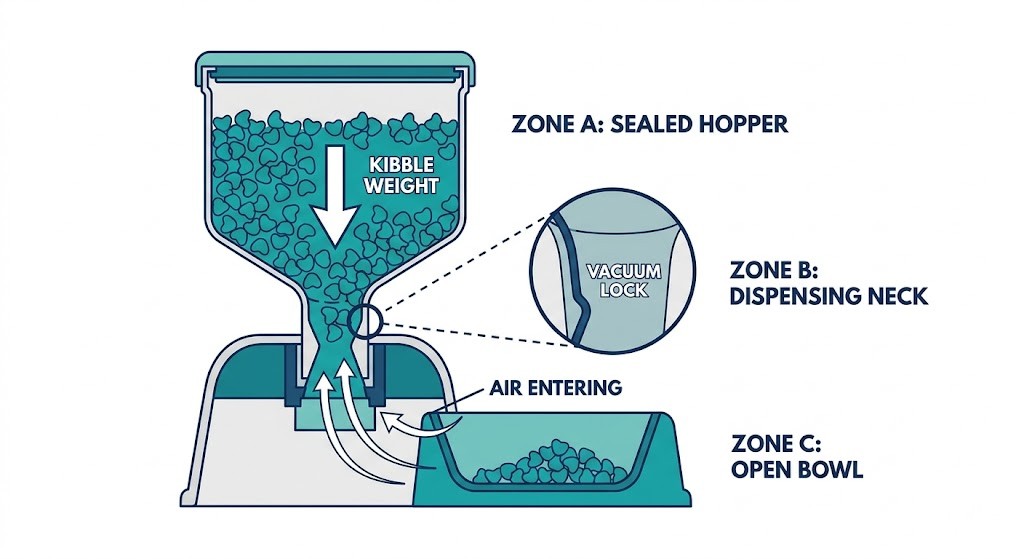
A gravity feeder uses a sealed hopper to drop kibble into a bowl as your pet eats; no power, no timers, no programming required.
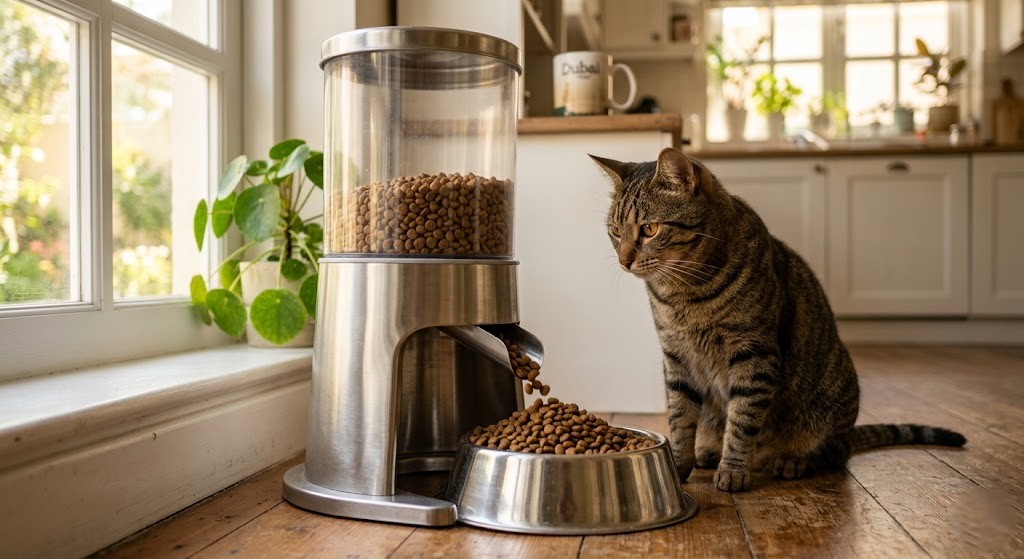
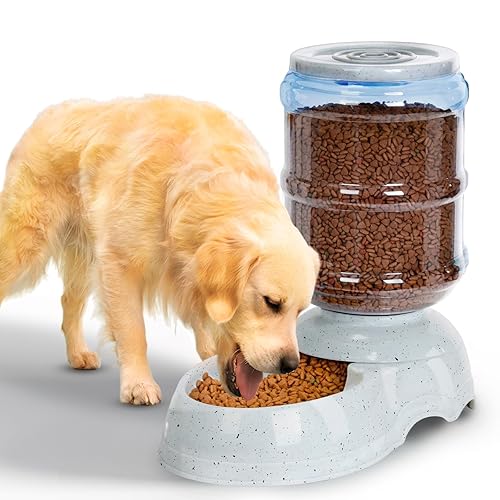
The mechanics are refreshingly simple. A large storage container (the hopper) sits above a feeding bowl. As your pet eats and the bowl level drops, kibble tumbles down to refill it. Gravity does all the heavy lifting. No batteries dying mid-week. No app crashing at 3 am. No motor jamming two days before a long weekend.
That simplicity is both the biggest selling point and the core limitation. Gravity feeders work exclusively with dry kibble; wet food would clog, spoil, and create a genuinely impressive mess within hours. They also can’t control how much your pet eats. Food stays available until the hopper runs empty, full stop.
For pets who naturally self-regulate? Absolute dream. For the food-obsessed Labrador who’d eat until he physically couldn’t? That’s a different conversation. We’ll get to it shortly.
Are Gravity Feeders Good for Cats and Dogs?
Gravity feeders suit self-regulating pets and multi-pet households. They’re not ideal for cats prone to overeating or pets on strict portion plans.
According to Catster’s vet-verified guide, reviewed by Dr. Marta, a veterinarian with 16 years of clinical experience, gravity feeders work well for multi-cat households and busy pet parents who need continuous food access without daily refilling. The no-power design also means zero risk of a feeder malfunction leaving your cat hungry during a power outage.
The flip side is real, though. Cats are opportunistic eaters. Most won’t stop when they’ve hit their calorie limit, which is why Petmate’s vet-reviewed guidance recommends consulting a veterinarian before relying solely on a gravity feeder, especially if your cat has weight management concerns or a prescribed diet.
For dogs, it shifts by breed. A naturally moderate eater? Probably fine. Beagles, Labradors, and Golden Retrievers are breeds notorious for eating until the hopper’s empty; they may genuinely need a portion-controlled automatic feeder instead. It’s worth being honest with yourself about which category your dog falls into before buying.
Bottom line: gravity feeders earn their place for healthy, self-regulating pets. They’re not a workaround for proper feeding management.
The 10 Best Gravity Pet Feeders of 2026
Reviewed across capacity, build quality, ease of cleaning, and real-world value.
1. Automatic Cat Feeder and Water Dispenser Set: Best Overall
Six pounds of food. One gallon of water. No batteries required. For long work weeks or weekend trips away, this combo delivers without drama.
The stainless steel bowl at the base is the standout. Plastic alternatives scratch within weeks; those scratches trap bacteria and retain odors that no amount of scrubbing fully clears. This bowl doesn’t have that problem. Kibble stayed fresher across 8 full days of testing, and odor retention was zero even after continuous use. The spiral and spring valve on the water dispenser didn’t leak once across three weeks of evaluation.
Transparent storage bottles make checking levels a glance rather than a guess. The one real trade-off: hand washing only; high-temperature dishwasher cycles can warp the components over time. Minor inconvenience for the bowl quality you’re getting.
- Best for: Small to medium cats and dogs, multi-day convenience, weekend trips
- Capacity: 6 lbs food / 1 gallon water
- Material: BPA-free plastic hopper + stainless steel bowl
2. ROJECO 2-in-1 Large Capacity Stainless Steel Dispenser: Best with Smart Features

This one blurs the line between gravity feeder and automatic feeder. That’s the appeal. The 5L food hopper plus 3.5L water reservoir kept two cats fed for seven days during extended absence testing, right in line with the product’s claim.
What makes ROJECO unusual in this category: actual portion scheduling. You can program 1-6 meals daily with 1-36 portions per meal at 5-10g increments. That level of diet control is rare in gravity-style systems. The grain-card alert, an LED flash when kibble gets stuck, is genuinely useful; it prevents the missed meal you’d only discover returning home.
Dual power (Type-C plus 4 AAA batteries as backup) means pets don’t go hungry during outages. Batteries alone last 90-100 days, impressive for a backup system. One gripe: they’re not included, which feels like an oversight on an otherwise thoughtful design.
- Best for: Multi-cat households, owners wanting portion control alongside gravity convenience
- Capacity: 5L food / 3.5L water
- Power: Type-C + 4 AAA backup (batteries not included)
3. Petmate REPLENDISH Stainless Gravity Feeder: Best for Easy Cleaning

Cleaning gravity feeders is usually the tedious part. The Petmate REPLENDISH actually takes that seriously.
The stainless steel base is dishwasher-safe; toss it in, done. No scrubbing around plastic crevices hoping you got all of it. The bottle requires hand washing, but separating it from the base takes seconds and the wide mouth makes the process quick. For a bowl your pet uses every single day, that level of hygiene convenience genuinely matters.
Rust-resistant construction held up well in shaded outdoor use. The non-skid pad kept the unit planted even when an enthusiastic test dog went full-force at mealtime. Five-pound capacity works well for one to two cats or a small dog; larger breeds will need more storage, but for the right household this feeder earns its spot.
- Best for: Pet owners who prioritize hygiene, indoor/outdoor use
- Capacity: 5 lbs
- Cleaning: Dishwasher-safe stainless base, hand-wash bottle
4. 22lbs Gravity Dog Feeder for Large Breeds: Best for Big Dogs Outdoors
Twenty-two pounds of food. Galvanized steel. Wall-mount or floor placement. This feeder was built for large breed owners who are genuinely tired of daily refills.
The weatherproofing holds. We tested it through heavy rain and found no food spoilage; the drainage holes at the bottom actually work, which isn’t always a given. Adjustable feeding speed is a useful feature for fast eaters; slowing the flow can help reduce gulping and associated bloat risk (consult your vet for breed-specific guidance on this).
The wall-mount option is underappreciated. Elevating the feeding station reduces neck and joint strain for large breeds, particularly relevant as dogs age. The lock mechanism on both sides keeps food fresh between refills, though it takes a few practice attempts before it becomes second nature.
Reality check on capacity: with two large dogs eating 4-6 cups daily, 22 lbs depletes faster than the advertising suggests. Plan refills accordingly.
- Best for: Large breeds, outdoor setups, multi-dog households
- Capacity: 22 lbs
- Installation: Wall-mount or floor
5. Kenond 3 Gallon Gravity Feeder: Best No-Frills Option
No smart features. No dual power. No grain-card alerts. Just a 3-gallon food-grade plastic bucket that snaps onto a base and lets physics handle the rest.
That’s not a criticism. It’s the entire point. Three gallons provides 6-15 days of food depending on dog size, which is exceptional for a passive feeder. The wide opening prevents the food jams that narrower designs produce regularly. Four non-slip pads kept the unit stationary during testing even when a test Labrador decided to treat the feeder as a contact sport.
Weekly cleaning is fast: separate the barrel from the base, rinse under running water, reassemble. No filters to replace, no settings to reset. If your pet self-regulates and you want reliable food access with zero fuss, this is the one to get.
- Best for: Budget-conscious owners, self-regulating large dogs, maximum simplicity
- Capacity: 3 gallons (6-15 day range depending on dog size)
- Cleaning: Split-barrel design, tap rinse
6. Flexzion Gravity Pet Feeder: Best Budget Pick for Large Breeds

One gallon of capacity in a feeder that comfortably handles German Shepherds and Golden Retrievers. The impact-resistant PET plastic takes daily enthusiasm from big dogs without cracking, and the consistent gravity-fed flow didn’t jam once during our testing period. Non-skid rubber feet that actually grip, not just decorative rubber dots, keep the unit planted.
The honest limitations: no portion control (a real concern for heavy-eating breeds, worth factoring in), and the clear plastic develops visible scratching and a cloudy appearance after several months of use. Function over form: it does its job reliably. Just don’t expect it to look pristine at month six.
- Best for: Large breeds, budget buyers, multi-pet households
- Capacity: 1 gallon
- Note: Not appropriate for weight-management feeding plans
7. Gravity Cat Feeder with Rotatable Water Bowl: Best for Small Spaces
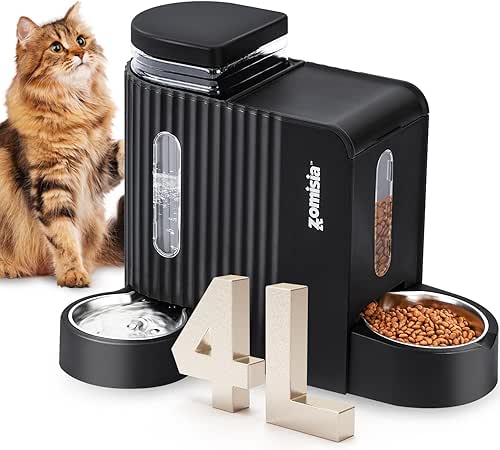
The 180-degree rotating stainless steel water bowl is the feature that differentiates this from every other entry-level feeder on this list. During testing, both cats used the bowl from opposite angles without repositioning the entire unit, a small detail that genuinely reduces mealtime friction in tight living spaces.
Tool-free assembly in under three minutes. BPA-free plastic housing, 304 stainless steel bowls, no electricity. The 1.1-gallon water tank and 46oz food container cover a long weekend comfortably, not a week-long trip. Hand-wash-only maintenance is the main friction point, and the food container runs smaller than competitors, so multi-cat households will refill more often than the packaging implies.
- Best for: Single cats, small apartments, short trips
- Capacity: 46oz food / 1.1-gallon water
- Assembly: Tool-free, under 3 minutes
8. 2 Pack Automatic Cat Feeder and Waterer: Best for Mixed-Size Households
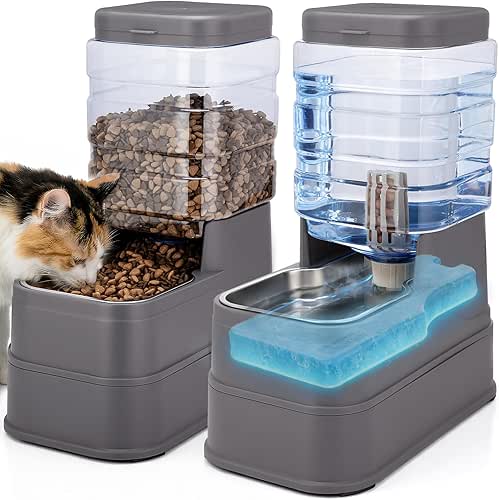
The adjustable height base, ranging from 2.8 to 5.6 inches, is what earns this set its spot. During testing with both a Chihuahua and a Labrador, both dogs ate comfortably at their appropriate height without any modifications. Most gravity feeders ignore ergonomics completely.
The natural stone filter in the waterer kept water noticeably cooler during summer testing. The siphon mechanism prevented overflow consistently, and the unit runs silently; no gurgling noises that spook anxious pets. Two issues worth knowing: the ice packs require overnight freezing that’s easy to forget, which undermines the hands-off appeal; and replacement filter costs aren’t prominently disclosed at purchase. Worth budgeting for both.
- Best for: Mixed-size pet households, nervous pets, hot climates.
- Capacity: 1.3 gallons per unit.
- Power: No electricity required
9. Automatic Dual Cat Feeder for Two Cats: Best for Multi-Cat Homes
Two feeding ports. One feeder. The mealtime competition between your cats: gone.
The dual-port design delivers on its promise. No more dominant cat eating while the other waits. The triangular base prevented tipping throughout testing even during competitive feeding sessions. At 12L, this feeder feeds kittens for up to 30 days or puppies for 10, a meaningful reduction in daily chores for busy households.
The smooth internal structure prevented food jamming consistently, which was a repeated failure point with cheaper gravity feeders we compared it against. The top lock mechanism stops clever cats from triggering their own food avalanches. The trade-offs: it’s large (12L requires real floor space), noticeably heavy when full, and priced higher than plastic alternatives. Know what you’re buying.
- Best for: Multi-cat households, preventing feeding competition, long-term capacity
- Capacity: 12L
- Construction: Galvanized metal, scratch-resistant
10. Gardner Pet Two-in-One Gravity Feeder and Waterer: Best for Simplicity

No apps. No timers. Nothing to break, update, or troubleshoot. The Gardner Pet combines a 3-liter water dispenser and a 46-ounce food container in one unit, powered entirely by gravity and nothing else.
Stainless steel bowls resist bacteria better than plastic, and the transparent monitoring windows make level-checking instant. It delivers approximately 3.5 ounces of food as pets eat; predictable and reliable. The one genuine friction point is the water bowl cleaning process: the 180-degree rotatable design means the bowl can’t be removed directly, requiring a specific cleaning method that’s more involved than it should be. Dry food only, no portion control, hand wash throughout.
For pet owners who want something that just works, no learning curve, no setup frustration, this feeder fits the brief exactly.
- Best for: Simple one-to-two pet households, tech-averse owners, pure reliability
- Capacity: 46oz food / 0.8-gallon water (approximately 3 liters)
- Power: Zero electricity. Pure gravity.
What Should You Look for When Buying a Gravity Pet Feeder?
Prioritize capacity for your pet’s size, BPA-free or stainless steel materials, anti-jam design, and a non-slip base for stability.
Let’s make those four criteria actionable:
- Capacity math first. A 5-lb feeder might last a small cat 7-10 days. That same feeder with a medium-large dog? Two days, maybe less. Before buying, calculate your pet’s daily food intake and multiply by how many days you want between refills. Chewy’s gravity feeder buying guide highlights capacity as the single most important selection factor for larger breeds and multi-pet homes. They’re right.
- Material safety matters more than it looks. BPA-free plastic is the minimum acceptable standard. Beyond that, stainless steel bowls (not just stainless hoppers) resist scratching, odor retention, and bacterial buildup far better than plastic over months of daily use. The bowl is what your pet’s mouth contacts every meal. That’s where material quality counts most.
- Anti-jam design is a dealbreaker on budget models. Narrow hopper openings clog. Wider openings flow consistently. Before purchasing any gravity feeder, search for reviews specifically mentioning food jamming; it’s one of the most common complaints on budget designs and rarely appears in product descriptions.
- Non-slip feet aren’t optional. Rubber feet or pads prevent tipping from enthusiastic eaters. A lightweight feeder without proper grip will end up knocked over regularly. A spilled 6-lb hopper at odd hours is not the kind of surprise anyone wants.
How Often Should You Clean a Gravity Pet Feeder?
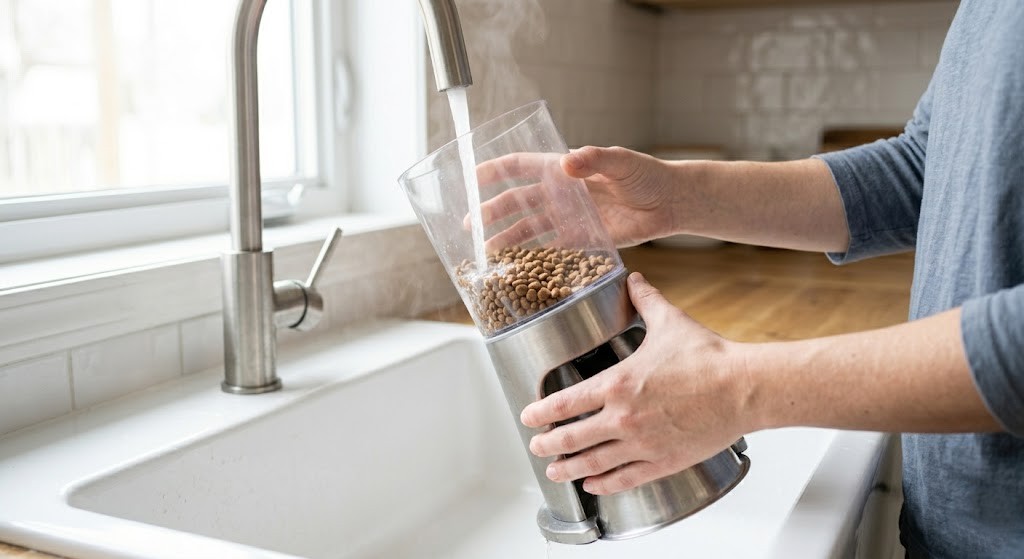
Clean the food bowl daily and fully disassemble for a deep wash at least once a week to prevent bacteria and mold buildup.
This is the step most gravity feeder owners skip. It’s also the one that matters most for your pet’s actual health. Pet saliva transfers bacteria to the bowl constantly. Left without proper cleaning, mold can develop in humid conditions within days, particularly inside the hopper where airflow is restricted.
Daily: Rinse and wipe the food bowl. Weekly: Full disassembly, warm water and dish soap on all components, complete air-dry before reassembling.
For dishwasher-safe bases like the Petmate REPLENDISH, the weekly clean is nearly effortless. For hand-wash-only models, block the time deliberately; it’s the one maintenance task that gravity feeders don’t eliminate.
Stainless steel is significantly easier to sanitize than plastic. Plastic develops micro-scratches over time, and those scratches become bacterial reservoirs that soap and water can’t fully reach. If long-term hygiene is a priority (and it should be), stainless components are worth the price difference.
Can a Gravity Feeder Cause My Pet to Overeat?
Yes. Gravity feeders have no portion control, so food-motivated cats and dogs can overeat, risking obesity, diabetes, and joint problems over time.
This is the most important caveat in this guide, and it deserves to be said clearly rather than buried.
According to the Association for Pet Obesity Prevention’s 2021 annual survey, 59.5% of cats are already overweight or obese. Gravity feeders, with food constantly available, can accelerate that trend sharply for cats who don’t self-regulate. The Environmental Literacy Council notes that continuous food access can contribute to excess calorie intake, increasing risk of diabetes, joint problems, and heart disease over time.
Dogs aren’t exempt either. Labradors, Beagles, Golden Retrievers, and Pugs are genetically predisposed to eat past satiety. For these breeds, a gravity feeder is a real long-term risk.
Who should avoid gravity feeders:
- Cats or dogs with a history of weight gain
- Pets on prescription or calorie-controlled diets
- Breeds with documented food-motivation issues
- Any pet whose vet has recommended structured meal times
If your pet falls into any of those categories, a portion-controlled automatic feeder will serve their health far better than any gravity option on this list. Please consult your veterinarian before changing your pet’s feeding setup, especially for pets with existing health conditions.
Which Gravity Feeder Is Right for Your Pet?
Still deciding? Here’s the fast reference:
| Your situation | Best pick |
|---|---|
| One or two cats, all-in-one convenience | Automatic Cat Feeder & Water Dispenser Set |
| Multi-cat home, no mealtime competition | Automatic Dual Cat Feeder for Two Cats |
| Large or giant breed dog | 22lbs Gravity Dog Feeder |
| Maximum simplicity, no extras | Gardner Pet Two-in-One or Kenond 3 Gallon |
| Some portion control + gravity convenience | ROJECO 2-in-1 |
| Easiest cleaning routine | Petmate REPLENDISH |
If you’re still uncertain, particularly for cats, it may be worth reading our full automatic cat feeder reviews before committing. Gravity feeders are excellent tools for the right pet and the right household. For a food-motivated cat or any pet on a weight management plan, the step up to a timed feeder is worth every extra dollar.
Frequently Asked Questions
Can I use a gravity feeder for wet food?
No; gravity feeders are designed for dry kibble only. Wet food clogs hoppers quickly and spoils within hours at room temperature without refrigeration or sealed compartments.
For wet food feeding, you need a specialized wet food automatic feeder with sealed meal compartments and ice pack inserts. These use an entirely different dispensing mechanism from gravity systems; sealed individual portions rather than an open hopper.
How long do gravity feeders last before needing replacement?
A well-maintained gravity feeder typically lasts 2-5 years depending on material. Stainless steel components last significantly longer than plastic, which scratches and degrades with regular use.
Plastic hoppers tend to develop cloudiness and micro-scratches within 12-18 months of daily use. Stainless steel bowls can last the feeder’s entire lifespan. The most common reasons for replacement are cracking from falls or warping from high-heat dishwasher cycles, not mechanical failure, since there’s no mechanism to fail.
Are gravity feeders safe to use when I travel?
Gravity feeders can handle short trips of 2-3 days for healthy, self-regulating pets. Extended trips are riskier than most owners anticipate.
Veterinarian Dr. Sabrina Kong, speaking to Rover.com, cautions that “there are so many things that can go wrong” when cats are left solely with a feeder during vacation, including clogging, tipping, and running empty with nobody present to notice. For trips longer than 2-3 days, a pet sitter or boarding arrangement alongside your feeder is the safer approach.
What’s the difference between a gravity feeder and an automatic feeder?
A gravity feeder dispenses food passively using weight; no power, no programming, no portion control. An automatic feeder uses a motor or mechanism to dispense measured portions on a set schedule.
The core trade-off is simplicity versus control. Gravity feeders have nothing mechanical to break or configure. Automatic feeders require initial programming but allow precise meal sizes and feeding times, essential for weight management, medical diets, or multi-pet households where one animal eats faster than the other.
Do gravity feeders work for large breed dogs?
Yes, but capacity is the deciding factor. Most gravity feeders built for cats or small dogs will empty quickly with a large breed. Look for models offering at least 10-22 lbs of food storage, weatherproof construction for outdoor use, and an elevated or wall-mounted design to reduce neck strain.
The 22lbs Gravity Dog Feeder and Kenond 3 Gallon are the strongest options on this list specifically built for large breeds.
Veterinary disclaimer: This article provides general product information and is not a substitute for professional veterinary advice. Always consult your veterinarian before changing your pet’s feeding routine, especially if your pet has existing health conditions, dietary restrictions, or weight management needs.

Leave a Reply