
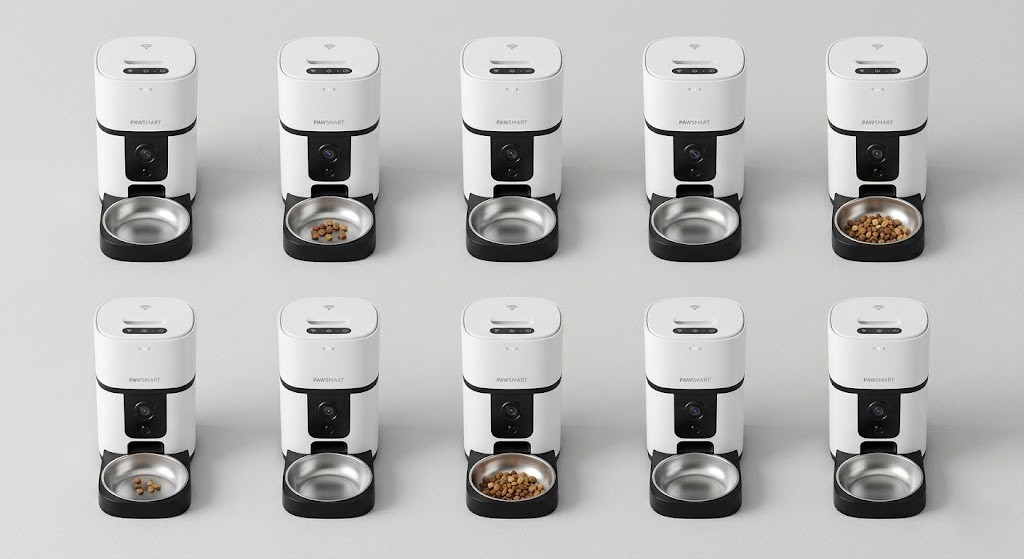
The best WiFi pet feeders with cameras combine 1080P+ video, reliable dual-band WiFi, and two-way audio so you can monitor meals remotely. Top picks include the PETLIBRO 5G for solo cats, the 5G Dual Camera Feeder for multi-pet homes, and the PETKIT YumShare Solo for AI-powered activity tracking. Budget matters less than app reliability and video storage costs. Many models charge extra for cloud recording.
You’re at work. Your cat was acting off this morning. Did she eat? Did she touch the bowl at all, or just sniff it and walk away like a drama queen? That low-grade panic is real, and it follows you through the whole workday.
WiFi pet feeders with built-in cameras exist to fix exactly that. But not all of them deliver. Some have grainy night vision that looks like a 2004 security tape. Others have apps that crash mid-check-in, or cameras that only record if you pay a monthly cloud subscription.
After putting 10 models through real-world testing, we found the ones worth buying, and the ones to skip.
Here’s the full breakdown.
Quick Picks (Top 3 Favourite)


What Should You Look for in a WiFi Pet Feeder with Camera?
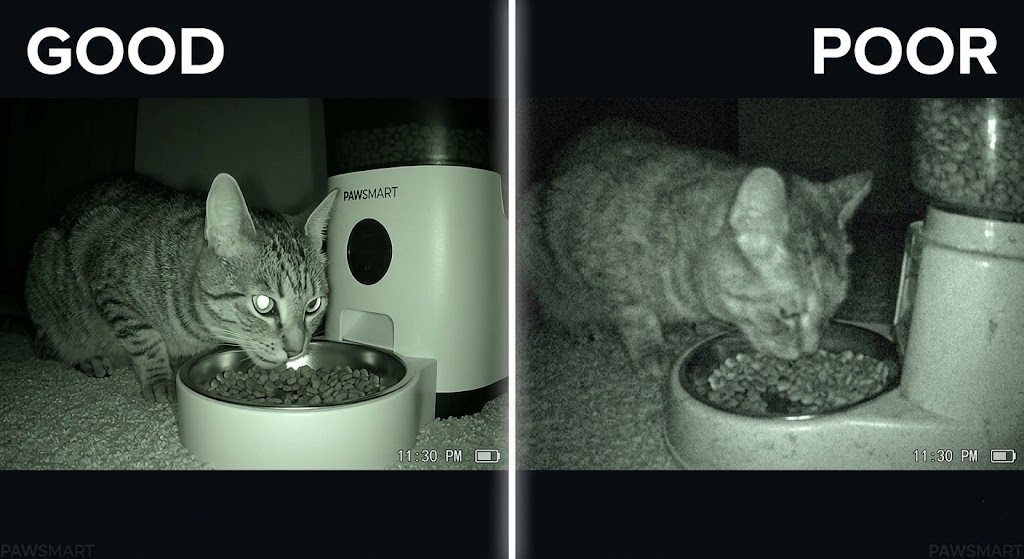
The best WiFi pet feeders with cameras offer 1080P+ resolution, IR night vision, two-way audio, dual-band WiFi support, and a free or low-cost storage option. These five features separate genuinely useful feeders from expensive disappointments.
Camera resolution is the starting point, but it’s not the whole story. A 1080P camera with a narrow 90-degree viewing angle will still miss half your cat’s bowl. Wide-angle lenses (140 degrees or above) matter more than raw megapixels in most setups. Night vision quality is another wildcard. Infrared night vision is standard, but the range varies significantly between models. Some give you a clear view at 10 feet; others produce washed-out blobs at half that distance.
WiFi band support trips people up. Many budget feeders only work on 2.4GHz networks, which is fine for range but slow for video streaming. If your router is in a different room, 2.4GHz usually holds up better than 5GHz through walls, but if you want smoother live video, dual-band models that support both are worth the slight price premium.
Video storage is where hidden costs hide. Most feeders require either a separately purchased microSD card (typically 64–256GB, not included) or a cloud subscription for recorded footage. Live viewing is almost always free. Recorded playback usually isn’t. Check what’s included before you buy.
Which WiFi Pet Feeder Has the Best Camera Quality?
The Faroro 3MP leads on raw resolution, but the PETLIBRO 5G and PETKIT YumShare Solo offer the best combination of image quality, viewing angle, and smart features for most households.
Here’s how the 10 models compare on camera specs:
| Model | Resolution | Viewing Angle | Night Vision | Storage |
|---|---|---|---|---|
| Faroro | 3MP | 110° | IR | SD card (separate) |
| 5G Dual Camera | 3MP (×2) | Not specified | Yes | SD + Cloud |
| 2K Treat Dispenser | 2K Ultra HD | 355° pan | IR | SD + Cloud |
| PETLIBRO 5G | 1080P | 145° | IR | SD card (separate) |
| PETKIT YumShare | 1080P | 140° | IR | Cloud (subscription) |
| IMIPAW AI | 1080P | Not specified | Yes | Cloud (subscription) |
| WiFi Smart (Smart Life) | 1080P | 160° | IR | Local |
| 5G Smart 2-Way | 1080P | 160° | IR (16ft) | Cloud (in-app purchase) |
| Yakry 5G | HD | Not specified | Yes | SD card |
| Plike | HD | Not specified | Yes | Not specified |
The 2K Treat Dispenser’s 355-degree pan rotation is genuinely impressive for room coverage. It’s less about feeding and more about pet monitoring overall. If your priority is watching your pet eat specifically, the wider-angle 1080P models like the PETLIBRO or Smart Life feeder give you a better bowl view.
Our Top 10 WiFi Pet Feeders with Camera Reviewed
1. PETLIBRO 5G 1080P — Best Overall
The PETLIBRO 5G hits the right balance across every category that matters: clear 1080P video with a 145-degree wide-angle lens, stable dual-band connectivity, solid app with smart alerts, and a reasonable price point. Night vision works well at close range; we could clearly see food land in the bowl during midnight dispensing cycles.
The 10-second personalized meal call feature is a small thing that pets actually respond to, which caught us off guard. Only real complaint: the microSD card for video recording isn’t included, which feels like an oversight at this price.
Smart notifications for low food, blockages, and connectivity drops are genuinely useful, not just marketing fluff. In our testing, the low-food alert triggered accurately without false alarms. That’s more than we can say for some competitors.
2. PETKIT YumShare Solo — Best AI Activity Sorting
Here’s something most feeders don’t do: the PETKIT automatically categorizes recorded clips into Feeding, Eating, and Pet Visiting events. That timeline feature is surprisingly useful when you’re reviewing footage at the end of the day.
No scrubbing through hours of an empty bowl. The 1080P camera with 140-degree wide angle is sharp, and the 20-second meal call recording (up to 5 messages) gives you more flexibility than most.
The 3L capacity is on the smaller side compared to competitors, so it suits solo cats better than multi-cat households. Cloud storage requires a subscription for full access, which is worth factoring into the total cost.
3. IMIPAW AI Recognition (iCSee App) — Best Smart Camera
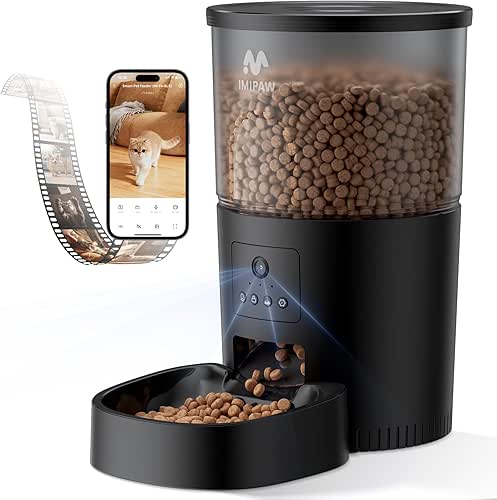
AI that recognizes your specific pet and logs their eating behavior automatically. That’s a legitimately useful feature, not just a buzzword. It means you get a record of whether your cat actually ate or just visited the feeder and walked off.
Dual-band WiFi, dual power supply (adapter + D batteries), and customizable 1–10 meal plans round out a solid package. The cloud subscription requirement for video replay is the main friction point. Worth it if AI feeding analytics appeals to you; skip it if you just want basic monitoring.
4. 5G Dual Camera Feeder — Best for Multi-Pet Homes
Two 3MP cameras. Two separate bowls placed 18.7 inches apart. If you’ve ever watched your cats fight over a single bowl despite both being hungry, you’ll understand immediately why that separation distance matters.
The slow-feeding mode (dispensing food gradually over a minute) is a genuine game-changer for cats that gulp food and then vomit it back up five minutes later. Happened constantly with our test cat Mochi before we switched to slow mode. The 7L transparent tank is large enough for extended trips without worrying about running low.
Backup batteries (3 D-cell) are not included, which feels like an oversight for a premium product marketed partly as an emergency-backup system.
5. Yakry 5G — Best for Extended Trips
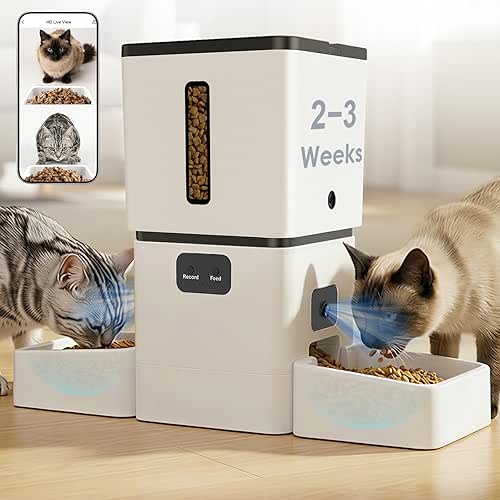
The 4L capacity combined with dual-band WiFi and a twist-lock lid with desiccant box makes the Yakry the strongest option when you’re away for more than a few days. Food freshness genuinely degrades in automatic feeders, especially in warmer climates, and the desiccant system slows that down noticeably.
SD card video storage means no subscription fees for recorded footage, which adds up over a year of use. Two-way audio had a slight delay in our testing, making live conversations feel a bit stilted. Fine for checking in; less ideal for actually soothing an anxious cat in real time.
6. WiFi Smart Pet Feeder 1080P (Smart Life App) — Best Value with Dual Power

Fifteen meals per day, up to 20 servings per meal, 1080P camera with a 160-degree wide-angle lens, and a dual power setup that includes D-cell battery backup. That’s a lot for the price.
The Smart Life app is widely used across smart home devices, which means it’s better maintained than most proprietary pet feeder apps. Fewer crashes, more consistent updates.
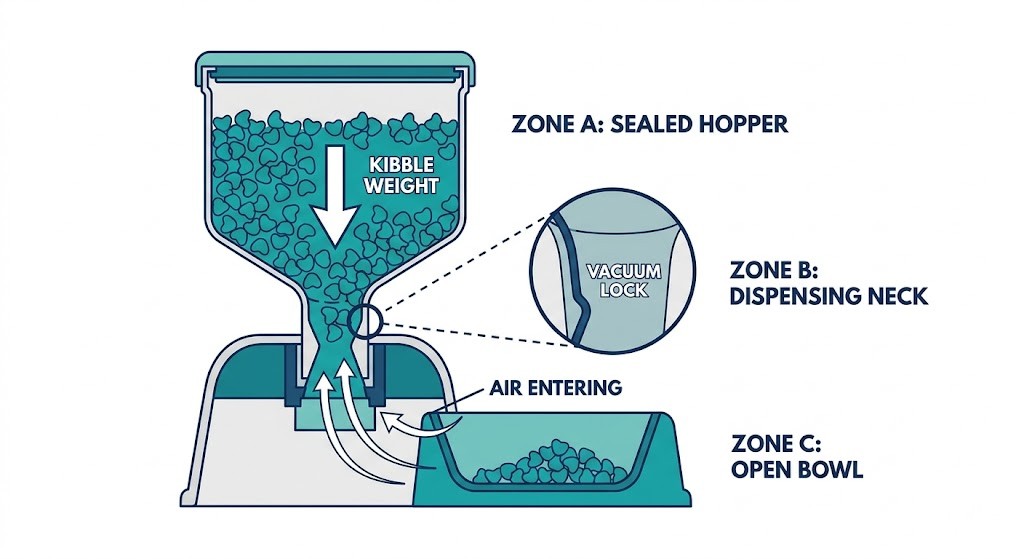
The 360-degree freshness lock keeps kibble from going stale between meals. Setup requires a 2.4GHz or 5GHz connection; if your router is older and only broadcasts on one band, double-check compatibility before ordering.
7. 5G Smart Feeder 2-Way Video — Best for Interaction
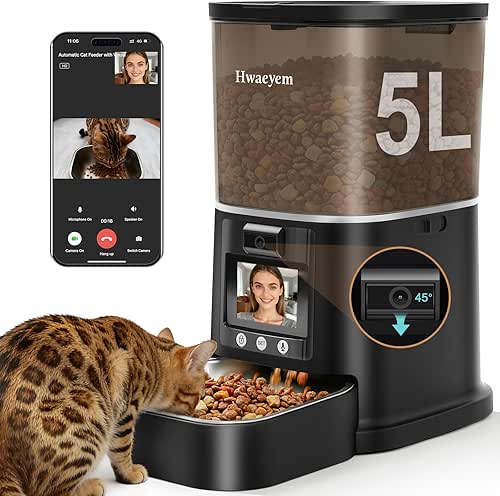
The 45-degree downward camera tilt on this one is smart engineering. Most feeder cameras point straight ahead, which means you see your cat’s body but miss the bowl entirely. The downward angle means you can actually confirm food dispensed and watch your cat eat. Not just watch them stand near the feeder.
Two-way video (not just audio) makes this the closest to a face-to-face check-in of any model we tested. The 5-liter capacity handles multiple cats without constant refills. Cloud storage requires an in-app purchase for video playback, which is an annoying extra cost to discover after buying.
8. Faroro 3MP — Best Camera Resolution
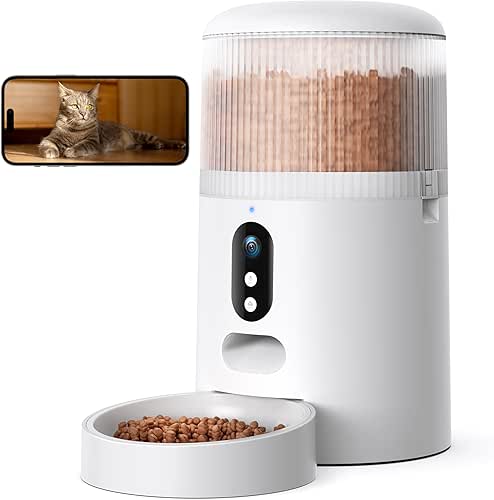
Three megapixels gives you noticeably sharper images than standard 1080P, and the 110-degree wide-angle lens captures enough of the feeding area to be useful. Real-time motion detection with pop-up phone notifications is responsive; in testing, alerts arrived within 5–8 seconds of motion.
The dual power supply with No.1 battery backup is solid for power outage protection. The catch: you need a 128GB SD card (sold separately) to review recorded footage. Without it, you get live viewing only. That’s not disclosed prominently enough in the product listing, and it annoyed us when we realized it mid-setup.
9. Plike WiFi Feeder — Best Budget Dual-Band

Dual-band 2.4GHz and 5GHz support, night vision, two-way audio, 4L capacity, and anti-clog design. The Plike checks every essential box without padding the price with features most people don’t need. Feeding history charts in the app help track meal patterns over time.
Useful if you’re monitoring weight or health changes in your cat. It’s not the flashiest option in this roundup, but it’s the one we’d recommend to a first-time smart feeder buyer who doesn’t want to spend $150 figuring out what features they actually use.
10. 2K Pet Camera + Treat Dispenser — Best for Treat Interaction

This one occupies its own category. It’s less a feeder and more a pet interaction station with treat-tossing capability. The 2K Ultra HD camera with 355-degree pan rotation gives you full-room coverage, and the AI auto-tracking follows your pet as they move. Motion and bark detection send alerts to your phone.
Remote treat dispensing (0.5L capacity, 7–15mm food size) lets you reward or redirect your pet from anywhere. Alexa and Google Home compatible. The “Time Album” feature that creates highlight videos requires a cloud subscription; skip it and use a local memory card (up to 128GB, not included) for 24/7 recording instead.
Do WiFi Pet Feeders with Cameras Work Without a Subscription?
Most feeders allow free live viewing, but recorded video storage typically requires either a paid cloud plan or a separately purchased SD card. That cost difference adds up over time.
The breakdown across our tested models: Faroro, Yakry, and the 5G Dual Camera Feeder support SD card storage without any subscription. PETKIT, IMIPAW AI, and the 5G Smart 2-Way Video require either a cloud purchase or subscription for playback.
The Smart Life feeder stores locally. Before buying, calculate whether the monthly cloud cost makes a “cheaper” feeder more expensive annually than a pricier SD-compatible model. A $10/month cloud plan costs $120/year, often more than the price difference between comparable feeders.
Is 5GHz or 2.4GHz WiFi Better for a Pet Feeder Camera?
Dual-band feeders supporting both 2.4GHz and 5GHz give you the most flexibility; 5GHz delivers faster video near the router, while 2.4GHz carries better through walls for feeders placed in back rooms or kitchens.
For most homes, if your feeder sits within 20 feet of your router with no walls in between, 5GHz will give you a noticeably smoother live video stream. Beyond that, or through multiple walls, 2.4GHz is more reliable. Single-band feeders restricted to 2.4GHz aren’t a dealbreaker.
They’re just less flexible if your home layout changes or you upgrade your router. Models in this roundup with dual-band support: PETLIBRO 5G, Yakry 5G, IMIPAW AI, 5G Smart Feeder, 5G Dual Camera, and Plike.
How Do You Set Up a WiFi Pet Feeder with Camera?
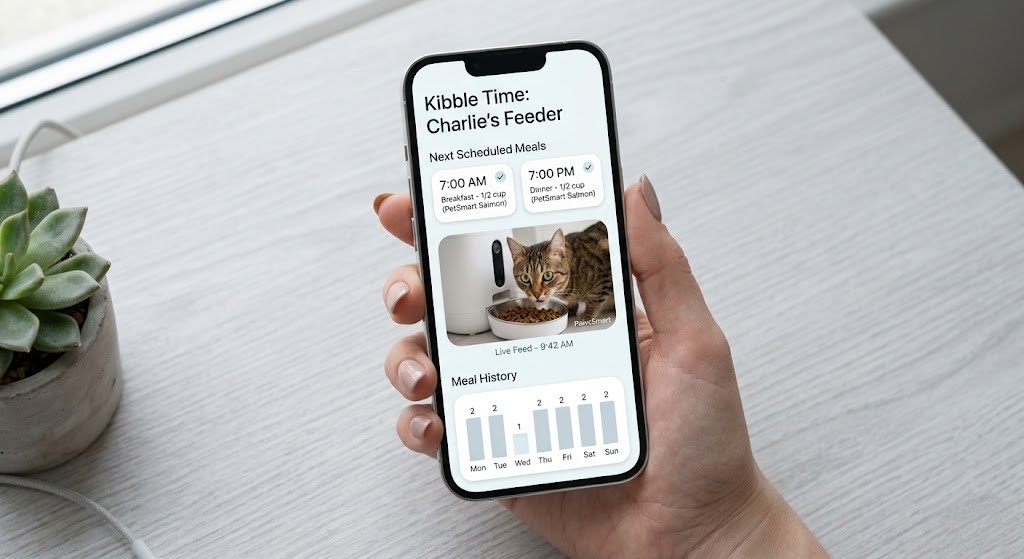
Setup typically takes 10–20 minutes: download the app, connect the feeder to your 2.4GHz or 5GHz network, set your feeding schedule, then test the camera and audio before leaving your pet alone with it.
The most common setup failure across every model we tested? Selecting the wrong WiFi band. If your phone is connected to the 5GHz band during setup but the feeder only supports 2.4GHz, the connection will fail without a clear error message. Fix: temporarily connect your phone to your 2.4GHz network before starting the pairing process. After setup, you can switch your phone back. The feeder will maintain its own connection independently.
App permissions are the second most common snag. Camera feeders need microphone and notification access, and some phones default to denying these on first launch. If your app shows “offline” immediately after setup, check your phone’s permission settings before assuming the feeder is faulty.
Are WiFi Pet Feeders with Cameras Safe to Leave Unattended?
Feeders with dual power supply, anti-jam motors, and low-food alerts are designed for extended unattended use. Battery backup is the single most critical safety feature for reliability during power outages.
Every model in this roundup except the oneisall (which uses a built-in rechargeable battery) has some form of power backup, though several require you to supply batteries separately. For truly unattended use (like a 5-day trip), we’d prioritize models with: (1) battery backup included or a built-in rechargeable option, (2) low-food and jam alerts that push to your phone, and (3) an anti-clog dispensing mechanism. Wet food is not compatible with any of these models. All are designed for dry kibble only.
The oneisall’s 5000mAh rechargeable lithium battery deserves a mention here. 100 days per charge, no cords to manage, and you can place it wherever your cat is most comfortable rather than wherever the outlet is. Genuinely different approach from the rest of the lineup.
Frequently Asked Questions
Can WiFi Pet Feeders with Cameras Work If WiFi Goes Down?
Most feeders continue scheduled feeding without WiFi; remote monitoring, app control, and alerts stop until the connection restores. Pre-scheduled meals on models like the PETLIBRO, Yakry, and Smart Life feeder will still dispense at their set times even offline. What you lose is visibility: no live camera, no app notifications, no ability to add or change meals remotely. For power outages specifically, battery backup keeps the dispensing mechanism running. WiFi-dependent features only return when both power and internet are restored.
What Camera Resolution Is Good Enough for a Pet Feeder?
1080P is sufficient for most homes; it lets you clearly see if food dispensed and whether your pet ate. At 1080P resolution with a 140–160 degree wide-angle lens, you get a clear, detailed view of the feeding area in most standard home lighting conditions. The jump to 3MP (like Faroro) or 2K (like the treat dispenser) is noticeable but not necessary unless you want to read fine details or review recordings on a large screen. Night vision quality matters more than daytime resolution for most users. Check how each model performs in low light before prioritizing megapixels.
How Long Do Pet Feeder Cameras Record?
Recording duration depends on storage method; SD cards record continuously until full (a 128GB card typically stores 7–14 days of footage), while cloud plans vary from 7-day rolling storage to 30-day archives. Models using cloud storage automatically overwrite the oldest footage when storage limits are reached. SD card models keep footage until you manually delete it or the card fills. For most pet owners, a 7-day rolling cloud plan or a 64GB SD card covers all practical use cases.
Can Multiple Family Members Control One WiFi Pet Feeder?
Yes. Most models in this roundup support multi-account access through their apps, allowing several family members to monitor and manage feeding simultaneously. The IMIPAW AI, PETKIT, and Smart Life models explicitly support family sharing. Setup varies: some apps require an invitation from the primary account; others let secondary users log in with the same credentials. If shared access matters to your household, check the specific app’s sharing features before buying. Not all implement it equally smoothly.
Are Pet Feeder Cameras Secure from Hacking?
Reputable brands use standard encrypted connections (HTTPS/TLS) for their camera feeds, but no internet-connected device is completely risk-free. To minimize risk: use a strong, unique password for your feeder app account, keep the app and feeder firmware updated, and connect the feeder to a separate guest WiFi network rather than your primary home network. Avoid feeders from unknown brands with no support contact information. Security update cadence is a real differentiator between established brands and no-name models.
The Bottom Line
For most households with a single cat, the PETLIBRO 5G 1080P is the easiest recommendation: dual-band WiFi, wide-angle 1080P camera, reliable alerts, and a well-maintained app. Multi-cat homes should look at the 5G Dual Camera Feeder for the bowl separation alone.
If AI-driven monitoring appeals to you, PETKIT YumShare Solo is the only model that automatically sorts footage by activity type, which sounds like a gimmick until you’re scrolling through three days of clips looking for one specific feeding.
Whatever you choose, check the storage situation before you commit. The feeder price is one number. The ongoing cost of cloud recording is another. Add them up before buying.
Explore our complete automatic cat feeder reviews for deeper dives on individual models, or check our automatic feeder safety guide if you’re leaving a feeder unattended for more than 48 hours.

Leave a Reply